
Here’s a repository of random musings including but not limited to interviews, attempts at writing for humor, and sports commentary 🐩 .
Kedai Makan: A Product of Perspective and the Result of Consistency

The moment I walk into a restaurant I can’t help but ask myself, “Would I work here?” Whie it’s not a classic musing such as smell, vibe (as they call it), ambiance, or business, my question envelopes all those tactile senses into one feeling. Kedai Makan was the first restaurant in Seattle that answered my query with a resounding, yes. Yes, I would work here. Since my fledgling years at university, I’ve held on to a dream, a far-fetched one at best, of someday opening a restaurant, bar, or a hotel with, you guessed it, restaurants and bars.
Often, customers of restaurants laud their favorite joints, spots, jawns, or whatever you want to call them. But why do we fall in love with these spaces? It might be because of their ever so juicy pork belly buns, that busser that always fills up your water cup at the most opportune moments, or even the wobbly chairs that are - at times - annoying, but weirdly endearing. The truth is, us customers rarely can put a finger on the elements that make our favorite restaurants, well our favorites. Each restaurant’s atmosphere is innately effervescent. But to say that every dish, upholstery choice, or music selection is entirely manicured may be far fetched. While there is intentionality behind every decision, in no way is a restaurant stagnant or finished. In fact, these natural fluxes, quirks, and artifacts are what makes restaurants living, breathing ecosystems.
Kedai Makan, nestled between East Howell Street and Bellevue Ave, is the brainchild of Chef Kevin Burzell and Allyson Wilson. While the restaurant is often categorized as Malaysian inspired, there’s much more to Kedai than meets the surface. Kedai and its success are the result of the couple’s broadened perspective, unabashed willingness to explore, and dedication to consistency (which is key, if anything).
I was able to catch Allyson on a Thursday afternoon at the shop. Jazz wafts through the dining room as the kitchen produces its own cacophony (not exactly banging pots, but you can imagine). Amidst all the moving parts from produce deliveries to phone calls, Allyson emanates an effortless balminess during our conversation. To boot, when we spoke, Seattle’s restaurants were beginning to feel the early effects of COVID-19. Rather than discuss the obvious topics at hand, we pondered on the small things from pictures on the wall to the importance of sticking to your guns.
Alexander Wen: There are so many ways of starting a restaurant or even food concepts. With Kedai starting as a farmers market stand, transforming to a take out window, and now a brick and mortar, do you think restaurant owners should scale and acclimate to each level or is opening a full service location something you have to learn on the fly?
Allyson Wilson: There are a lot of paths. I can't speak for everybody. For us, there was no other option because of money. If we had the money we would have done it differently but I think it was very organic in the sense of starting with the farmers market. We were able to see if we would have a following and people interested. Almost like a test market because nobody else was really doing much Malaysian in Seattle. From there, we did a pop up for a little bit as well, but it was the little steps at each point, where we said, ‘Oh, this is working we should continue with it.’ We needed to figure out our next step. Because if we didn’t, we wouldn't have the foresight or the money to jump into something new. It's already so competitive.

Roti Jala
There're so many different routes that people are taking. But, at least for us, it was a smart thing to do. I think that's why you see people doing pop ups and all that because they don't they don't have the money. It’s the only way to build your brand. I don't even like that term because I don't even know what our brand really is because we've never really pushed anything like that. But you develop your following, and you get feedback. You can either change it or not. It's all about testing the waters and seeing what that allows you to do.
With regards to the constant increase in competition within Seattle’s restaurant industry, how do you approach longevity alongside the changing landscape?
We’ll be here five years in September, and before that two years in the takeout window. And as an owner, you’re always waiting for it to drop off when people stop coming because there are so many options. That's what we're proudest about. We've kept it. Business is so consistent. I think the key is that you only can take it day by day, year by year. If you're consistent with your product, and you put the time in and you work at it. The consistency is going to pay off and people are going to keep coming.
What went into designing Kedai Makan as it is? Often, new concepts and restaurants are quite manicured, almost too perfect looking. What was your vision of the space?
Still evolving and maintaining at the same time. We’re always thinking about the little things we can do to make it better make it more attractive. But the way the restaurant looks is something we're less concerned with compared with other places. The space was already beautiful. It's old wood and the build that we wanted. So all we did was paint it a similar color to what our take out space was. The photos on the walls are just photos of our travels, mostly taken on an iPhone. They’re from all over in Southeast Asia. The frames are all just goodwill, and a lot of them don't match. That's a part of the charm. I can look up on the walls and remember these places. It brings back a memory for me and I think there's something so tangible and honest about that. It's soulful.
“When you’re in these walls all the time, you lose perspective. You forget about the big picture.”
What’s the story behind the photograph of the bicycle in the alleyway?
I think that’s Malaysia. When we traveled, basically every corner you turn around it's a beautiful mural. There's nothing phenomenal about it but it's an everyday scene. I don't know, it makes me happy when I look at it.
You’ve brought your chefs on trips to Malaysia before. Some may presume that after a trip like that, the menu will change or you all will find new inspiration. How do you process a trip like that for yourself and with regards to the restaurant?
Twofold. Number one, we are here a lot, so we just need to get away and remember why we're doing this in the first place. This would have never been created if we didn’t love traveling. So for us, we just needed to get away. We needed to see new things. When you're in these walls all the time, you lose perspective. You forget about the big picture.
And then of course food wise. One time we went to Penang and Kevin was specifically wanting to learn more about Indian curries. There are usually certain areas or things that we might focus on. But a lot of that is fine tuning. There’s also trying the same dish at multiple places and saying, ‘we like this, we don't like this, this how would we change this to make it our own.’ There’s plenty of food inspiration but it’s overarching. At the end of the day, it’s to remind us of what got us started and how we can maintain the consistency.
With that being said, there’s a spectrum of what’s considered ‘authentic’, but to you and Kevin, how do you define and approach authenticity?
Yeah, it's a great question because when you say authenticity, I almost cringe because I’ve heard that so much. It comes back to the fact that we have been so interested in other cultures and wanting to learn so much about Malay, both food-wise and culture-wise.
There's such a melting pot of different things in Malay cuisine, it’s the true fusion. With that being said, we want to stay somewhat true to Asian cuisine, but we never want to be put in a box or expected to do everything a certain way. Obviously, we can’t always get the right ingredients. Being in Seattle, certain things have to change to a degree. Although, we try to keep things weird and sometimes we try to keep it authentic, I suppose.
We definitely don't want to bastardize things either. I would never look down on someone that wants to take the time and work hard to learn another cuisine and say ‘you’re not doing it the right way.’ I think sometimes we can see the culture from a different perspective. We’re both from the states and lived in Germany for a little while. Our perspective is nobody else's and that’s what makes it unique. That's what makes it work. People are always going to have their opinions but in general, people are supportive and believe that when food is good. It’s good.

Ayam Masak Merah
Kedai Makan doesn’t take reservations, consistently has hour (or more) long waits, and doesn’t usually take to-go orders. There’s almost a nonchalance to this approach, hard to get, per se. Do you think this works in the restaurant industry or in general, what’s your take?
I'm noticing it more in Seattle now. If you're in Malaysia, or Southeast Asia somewhere, when you see a long line, you automatically think, ‘that must be good food.’
It comes down to being honest with people about things. If we were able to maintain our product consistently enough to do tons of takeout, delivery, and cater, we would do that. But the reality is, we're not set up for that. If we tried to do that then our product at the restaurant would suffer. In order for us to create the best product we can for everybody that comes in here, we have to give up some things. You have to, and Kevin would definitely say this, to stick to your guns and say, ‘I'm going to work to make this product as best as I can. And this is all I can do.’ So why not be honest about what we're capable of. It's not always going to be the way people want you to do it, but it also does create a demand for it. I think people understand it.
“Going to Asia, opening the restaurant and my whole trajectory would have been different without traveling. I think it’s so important to see how big this world is”
How do you deal with the unavoidable monotony in running a restaurant?
I feel like this is my baby and I'm going to do whatever I have to do to make it work successfully. It can definitely get boring, I would say, for Kevin, as much as he loves cooking, often, he’s in a career where he’s doing the same things over and over. For me, I get up and do the groceries, and then at the restaurant, I'll either serve or run food. Whatever has to be done. It's definitely monotonous, but you have to keep in mind that those are the things that need to be done. The payout is worth it.
What do you look for in your staff? It seems as if all the best restaurants have the most interesting server, cooks, etc. Most of the time they’re tatted up (at least in Seattle).
I don't know if I had a vision of what our staff would be like. Somebody has to have a little bit of experience. Not necessarily at a restaurant but customer service in general. You have to be able to work with people, as obvious as that sounds. Beyond that, I generally look for people who might have something interesting on their resume. If it’s travel, I feel like they've seen the world a little bit and have perspective. We’ve had a few people going to law school and a lot of our cooks are in bands. They’re all doing other fun things. I look at all those things and try to put them together into a great bunch of people. It's worked out really well.
Back to the travel question. I often think traveling for leisure is akin to seeing the world through rose colored lenses, while actually living in a foreign location allows for a more realistic perspective. How has living in Germany/Europe contrasted to vacationing through Asia with regards to your personal growth/perspective?
When we were living in Germany, we were living in a small town. It was work for our government so we were still in a base. We didn't learn the language so we weren't totally immersed. But we lived there for about two years and it is hands down the best thing I've ever done in my life. If we didn’t live there, we probably wouldn't have been able to travel. It really opened our world up. That led to Asia, and that led to Kedai. Going to Asia, opening the restaurant and my whole trajectory would have been different without traveling. I think it’s so important to see how big this world is, and that there are other views. Obviously, Asia was the ‘aha’ moment, but there was so much that led up to that.
Why Asia then?
We both got jobs working at a big hotel in the Alps. It had three restaurants and was primarily for the army, so there were lots of Americans. When we were getting ready to leave, we wondered ‘Well what's next?’ Having just traveled all over Europe, Kevin told me he really wanted to go to Asia. So we decided to save up money and go there for a year or so. That was a whole different mindset, not even limited to just food but just everything. It all stems back to seeing how people around the world live and how they think.
For you and Kevin, is there a point where both of you would want to evolve, try something completely new, or take some time off?
It depends on the day. There are some days where you go, ‘I just want to do something new, and be excited.’ Not that we’re not, but it’s definitely not something new. There are also days where you have to put the time in. It's working really well, and we've created something that’s unique and special.
Do you really want to give that up for uncertainty?
I think it's crazy if you don't think about it. Whether it’s to evolve within the same space or do it in a small way by changing the menu. Everybody still has hopes and dreams. But at the end of the day, is it such a bad thing to keep what you have? I feel that we've only made Kedai more consistent and put so much work into it. You don't want to start over. I don't want to, but certainly, there are days it crosses my mind.
Okay, last question, where/what are you and Kevin eating on your days off?
That’s a great question. Often, we talk about all these places we want to try. But more than half of the time, we end up cooking. We’ve been doing a lot of fish lately but he'll usually go to Uwajimaya and make small bites. Kevin likes to do courses so we'll do six plates. Little, little bites.
This interview has been edited and condensed for clarity.
The MLB Postseason: Tradition won't do

America’s pastime, full of lore, needs a change. Yes I said it. Light me up. As someone who has played baseball and been a fan since I could swing a bat, I am cognizant of the tradition. But even the most storied institutions must move with the times.
Recently, Rob Manfred and Major League Baseball proposed a revamping of the postseason structure. The change will expand the playoffs to a total of 14 teams, 7 from each league. These 7 teams will be made up of 3 division winners as per usual, and 4 wild card teams. The top record in each league, respectively, will receive a first round bye and the other two division winners will be able to choose their opponent out of the wild card teams. The two other wild card teams will be matched up. For more detail, you can read up here.
Whew, now that the specifics are out there. I will admit, I do not agree with all of the proposal. But I’m going to start with what I love, and what baseball needs. Expanding the playoff bracket from 10 total teams to 14 teams allows for more competition for meaningful games in September. Often, we see mid-level clubs with little to nothing to play for. What’s worse than watching the San Diego Padres linger around .500 baseball to have no chance at the playoffs and get a mediocre draft pick? This will put more juice into the already grueling and, admittedly, boring regular season schedule.
Another part of the proposal (that is not mentioned above) is the changing of the garbage that is the current wild card round. In the new format, the wild card round will be a best of 3 rather than the one game, winner takes all format. This new format gets rid of a dominant pitching performance determining a wild card win, but showcases a club’s full roster, while being short enough to not be an eyesore.
Now, the MLB should entirely bypass the “choose your opponent” nonsense. This an unneeded and utterly useless gimmick that the MLB should avoid at all costs. The playoffs, in all sports, are beautiful because of the unpredictability of it all and “fate” driven matchups that come out of it. There’s a reason why this has never been done in professional sports. Enough said.
At the end of the day, baseball has been a sport renowned for tradition. But along with tradition comes complacency and stagnancy. If anything, away from the specific rule changes, the question is, does Major League Baseball want to evolve or sink away into tradition? I hope it’s not the latter.
Eccentric Betting Lines: Super Bowl

Tide Commercial Runs
Over Under line: 1.5 advertisements
As we all know, Tide (a subsidiary of Proctor and Gamble) took over both the 2018 and 2019 Super Bowl. Riding the wave of the Tide Pod meme, they delivered advertisements featuring everything from the Old Spice guy to David Harbour (the cop from Stranger Things). With less hype around Tide this time around, can P&G continue their dedication to virality, or do they pull back the horses? Let’s put some money on it.
Percentage of Chiefs Touchdown drives in 7 plays or under
Over Under line: 65%
Lots of talk has been around the Chiefs’ ability to score quick. By quick, I mean very quick. During the playoffs, the chiefs have scored in seven plays or under at an astonishing 72.7% rate (8/11 touchdown drives). With their big play ability, and track team of Tyreek Hill, Sammy Watkins, Mecole Hardman at wide receiver, 6 points can be on the board before you even blink. During the regular season, the 49ers gave up a league low 5.9 yard per pass attempt, were 5th in total sacks (with 48 total sacks), allowed the least passing yards (169.2 a game), and were second in the NFL in total yards allowed. Will this high flying, pass happy, Chiefs offense be able to replicate the same big play ability this Sunday against a seemingly kryptonian opponent?
Load Management, a topic that shouldn't exist

Load management. Alas, it has joined the buzzword ranks alongside “DeflateGate”, “Adjustments”, and “Trap games”. But this one is here to stay and I hate it. The basis of load management lies within resting players during games in order to keep players fresh and healthy for the playoffs or their long term careers.
To assess the sports “ethics” of load management, we must define the purpose of winning in the NBA. Should basketball teams aim to:
Win only when necessary (the playoffs, for games that determine seeds)
OR
Win at all costs for both competitive reasons as well as for fans
If the first statement is true, then by all means, load manage your players to your heart’s content. But the fact is, the former option isn’t true. It’s plain wrong. The NBA is not purely a competition, but an economic and social institution. Fans and entire cities dole out hard earned money and sacrifice precious time to see their sports idols play. Robbing the NBA and its fans of seeing their favorite players is odious and narrow minded. While the argument that load management enables players to compete in meaningful playoff games, cuts wear and tear, and allows for players to be healthy in the playoffs, skipping games is a perversity.
Currently, the NBA is able to fine teams $100,000 for sitting players during nationally broadcasted games (not even locally broadcasted games). Many may think, “that’s not enough”. But in reality, it’s not only insufficient, but completely erroneous. The real issue of load management lies in the NBA’s rigorous schedule, rather than the parameters and rules that surround “managing” players. Instead of disincentivizing billion dollar franchises with menial fines, the NBA must cut down total games played, back to backs, and other rigorous practices during the season. This not only limits injuries, but to incentivizes players to play the game that they love, without ruining their own lives and the experiences of fans everywhere.
Don't Travel, Explore

Is “travel” a buzzword? It sure seems like it. The word “travel” is usually tucked in between the phrases passion and hobby. While seeing the nooks and crannies of the world may be “what you love doing”, ask yourself exactly why you travel. What do you gain from it? Is it to escape from reality? What have you learned or taken away from the act of traveling?
I want to start this off by saying that in no way am I disincentivizing people to travel. By all means, go on a Mediterranean cruise, skydive in Dubai, get eaten by an orca whale in Canada, I don’t mind. The purpose of this article is to challenge your conception of traveling and introduce the idea of exploration.
When people speak about travel, glowing testimonials accompany them. Whether it be a new lease on life, inspiration to start a company, or a realization of pressing social issues, traveling (often to foreign lands) is life changing. Take a moment to think about how each vacation has changed you or contributed to your answer to the question, “Who am I?”. Has traveling really impacted your personal identity? Or does traveling act as a mindless escape?
In a world of social media and connectivity, we’re constantly exposed to the vastness of the world, almost to a fault. We get caught up in dreams, wants, and escaping. This mindset sacrifices focus on the present and the domestic portions of our lives. In the past couple of years, I’ve attempted to cut down on quote on quote “traveling” and have made a focused effort to invest more time in exploration. Let me dive into this.

Exploration, to me, looks like visiting the bodega down the street on a Sunday, speaking to the local bookstore owner, or finding a new reading nook in a new cafe nearby. The official definition is to “travel in or through…in order to learn or familiarize oneself”. Exploration should be done in places we physically reside in rather than places we long to be in. Where we call home, is arguably where we should be investing the most energy. This is where we form our closest friendships, start our families, and live our lives. Yet, many people seek to escape reality, often to far away lands instead of familiarizing themselves with what surrounds them, arguably what’s most important.
“Who and what we surround ourselves with is who and what we become.”
Take a moment to read the quote above and ask yourself: Why not explore, rather than travel? In the next couple of days, take 30 minutes to an hour to walk around your neighborhood. Be open minded, and let the seemingly familiar and mundane landscape surprise you.
The three pillars of employee experience and why startups need to take a closer look
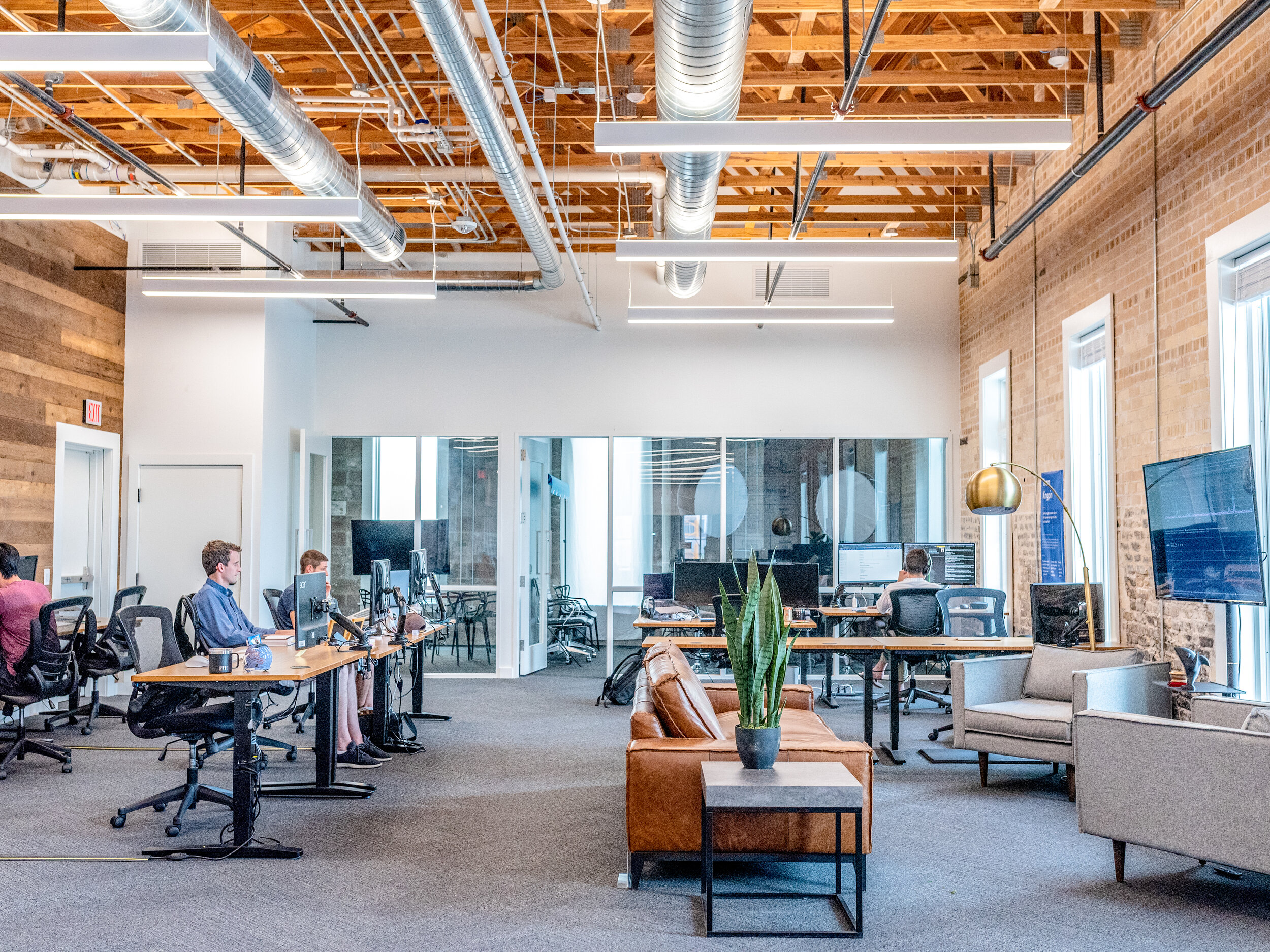
Startups must supplement high business growth with thought to employee and workplace experience. When the two aren't aligned, employees can feel neglected and lose sight of the company’s goals.
This summer, I’ve had the pleasure of interning at a high growth startup called Barn2Door. The Company empowers Farmers to sell food directly through online channels to engage their local communities. Since joining three months ago, Barn2Door has grown from 20 employees to now 27. The Company is on pace to double by year end, which creates a lot of energy in the office as new employees onboard. Being comfortable in an uncomfortable environment is NOT easy. But in the face of discomfort, a well thought out workplace experience can ease the discomfort, help new employees integrate, and encourage employees to stay grounded.
It takes foresight and empathy to acknowledge the discomfort that comes with growth. Employees succeed when they are aware of how and why the workplace tailors to them. Companies succeed when employees come to work motivated day in and day out. It's easy to see why it’s essential to focus on employee experience as companies evolve and scale - it encourages productivity for the company and professional growth for the employee (a win-win).
Workplace experience boils down to three main pillars: Doing, Seeing, and Feeling. Each idea covers different aspects of how employees interact with their respective workplaces. These topics circle back to how workers feel and what companies can change to better enable employee experience.
Doing: Is the workplace enjoyable? Does the office enable and promote people to collaborate, share information, and be productive?
Seeing: Does the workplace contribute to a positive public image of the company? Do employees see evidence of the Company mission?
Feeling: Do the workplace and activities within it make employees want to recruit their friends and colleagues to join the Company? Is the workplace something that employees are proud of?
At Barn2Door, Doing looks like open office space that enable employees to finish individual work and collaborate with others in communal areas. Seeing looks as simple as weekly Farmer spotlights showcasing real Farmers we help. Feeling at Barn2Door is management’s willingness to engage and listen to everyone’s thoughts, in regular meetings (daily, weekly, monthly) and through informal company-wide social events (e.g. “Thirsty Thursdays”).
I urge you to think of your own organizations with these ideas in mind. How do you feel about your organization? Does it enable you to be your best self and contribute to the organization? And, how can these realizations push workplace experience forward in tandem with growth? If you happen to be in management, take a moment to not only ask yourself these questions, but pose these questions to your employees. Find out how you can further enable your employees, that’s growth too.